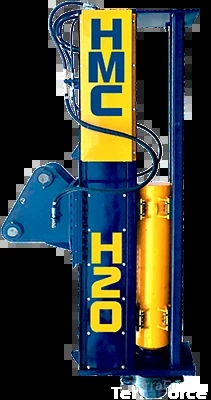
The press-in method represents a specialized static pile driving technique in deep foundation engineering where piles are incrementally pressed into the ground using controlled vertical force. Unlike percussion or impact-based pile driving systems, the press-in method employs a reaction anchor system installed in advance, creating a stable reaction frame that resists the downward force applied to the pile. This approach allows contractors to vertically insert steel H-piles, steel tubes, and reinforced concrete piles with precise depth control and minimal ground disturbance. The press-in piling technique is particularly valuable in urban environments and sensitive construction zones where vibration and noise limitations are critical constraints. Because this method eliminates the shock and dynamic forces associated with hammer-based driving, it significantly reduces environmental impact on adjacent structures, utility lines, and underground infrastructure while maintaining consistent pile penetration rates regardless of varying soil resistance.
The press-in method works across diverse geotechnical conditions, from soft clay and silty soils to dense sand and mixed strata layers, making it exceptionally versatile for foundation projects in challenging urban landscapes. Reaction anchor systems can be sized and configured to match specific ground conditions and pile load requirements, allowing the equipment to maintain controlled driving speeds even in hard-to-penetrate layers. The technology enables both installation of new piles and extraction of existing piles through reversal of hydraulic pressure, supporting site remediation and infrastructure renovation projects. Modern press-in rigs integrate load monitoring systems and inclinometers, providing real-time data on driving resistance, pile verticality, and structural integrity throughout the installation process.
Applications for press-in piling extend across residential, commercial, and industrial sectors, including multi-story building construction, bridge substructure work, and retrofitting projects where conventional hammering would cause unacceptable vibration or noise. The method proves especially effective in densely populated areas, near hospitals and sensitive facilities, and in projects with strict nighttime work restrictions. Because reaction anchors distribute load across large soil volumes, the press-in method can be employed in confined spaces where traditional reaction piles or reaction beams are impractical. This static piling approach also supports underpinning and foundation repair operations where precision and low-vibration characteristics prevent further settlement of adjacent structures. The controlled nature of press-in technology reduces soil disturbance, lowering risks of ground heave and lateral soil movement that can compromise nearby utilities and neighboring buildings, making it a preferred deep foundation solution for complex urban projects and environmentally sensitive construction sites.
The press-in method represents a specialized static pile driving technique in deep foundation engineering where piles are incrementally pressed into the ground using controlled vertical force. Unlike percussion or impact-based pile driving systems, the press-in method employs a reaction anchor system installed in advance, creating a stable reaction frame that resists the downward force applied to the pile. This approach allows contractors to vertically insert steel H-piles, steel tubes, and reinforced concrete piles with precise depth control and minimal ground disturbance. The press-in piling technique is particularly valuable in urban environments and sensitive construction zones where vibration and noise limitations are critical constraints. Because this method eliminates the shock and dynamic forces associated with hammer-based driving, it significantly reduces environmental impact on adjacent structures, utility lines, and underground infrastructure while maintaining consistent pile penetration rates regardless of varying soil resistance.
The press-in method works across diverse geotechnical conditions, from soft clay and silty soils to dense sand and mixed strata layers, making it exceptionally versatile for foundation projects in challenging urban landscapes. Reaction anchor systems can be sized and configured to match specific ground conditions and pile load requirements, allowing the equipment to maintain controlled driving speeds even in hard-to-penetrate layers. The technology enables both installation of new piles and extraction of existing piles through reversal of hydraulic pressure, supporting site remediation and infrastructure renovation projects. Modern press-in rigs integrate load monitoring systems and inclinometers, providing real-time data on driving resistance, pile verticality, and structural integrity throughout the installation process.
Applications for press-in piling extend across residential, commercial, and industrial sectors, including multi-story building construction, bridge substructure work, and retrofitting projects where conventional hammering would cause unacceptable vibration or noise. The method proves especially effective in densely populated areas, near hospitals and sensitive facilities, and in projects with strict nighttime work restrictions. Because reaction anchors distribute load across large soil volumes, the press-in method can be employed in confined spaces where traditional reaction piles or reaction beams are impractical. This static piling approach also supports underpinning and foundation repair operations where precision and low-vibration characteristics prevent further settlement of adjacent structures. The controlled nature of press-in technology reduces soil disturbance, lowering risks of ground heave and lateral soil movement that can compromise nearby utilities and neighboring buildings, making it a preferred deep foundation solution for complex urban projects and environmentally sensitive construction sites.
Leading Press-in Method manufacturers include ACE, AJCE, ALL-KOR, APE, Antaeus, Apollo Techno, Avolon System, BSP International. TerraForce features 500 models from 40 manufacturers.
How many Press-in Method models are available on TerraForce?▾
TerraForce catalog features 500 Press-in Method models from 40 manufacturers with detailed specifications.
How to compare Press-in Method models?▾
On TerraForce you can compare Press-in Method models by specifications — weight, power, drilling depth, and other parameters. Use the comparison feature on the catalog page.