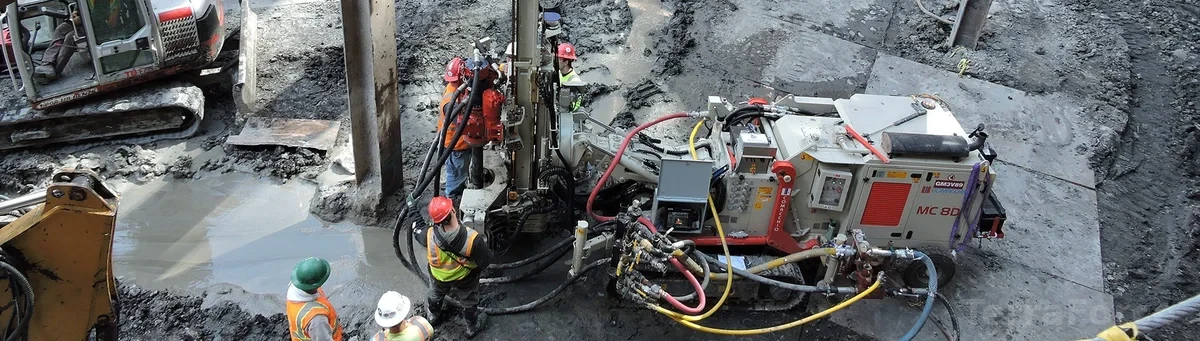
Tube-a-Manchette systems represent a sophisticated post-grouting methodology employed extensively in deep foundation engineering and geotechnical construction. These systems utilize pre-installed polyethylene sleeves, commonly referred to as manchettes, positioned along the length of boreholes to facilitate controlled grouting operations after initial pile installation or during remedial ground stabilization projects. The manchettes contain check valves that open when grout pressure is applied, allowing cement-based or chemical grout to be injected at precise depths without disturbing previously grouted zones. This selective grouting capability makes TAM systems particularly valuable in foundation work where compensation grouting is required to counteract settlement, reinforce weak strata, or improve ground conditions around existing piles and structures. The deployment of Tube-a-Manchette technology is especially prevalent in challenging soil conditions including soft clays, compressible silts, and layered geological formations where conventional grouting methods prove insufficient. Engineers utilize TAM systems to address ground behavior beneath sensitive structures, historic buildings, and dense urban environments where differential settlement poses significant risks to structural integrity. By injecting controlled volumes of grout through precisely positioned manchettes, foundation specialists can uplift settled structures, compensate for consolidation in compressible layers, and create load-bearing capacity improvements in previously inadequate soils. The technique accommodates multiple grouting passes, enabling adaptive ground treatment that responds to real-time monitoring data and settlement observations. Equipment used in Tube-a-Manchette operations includes specialized pressure grouting rigs, metering pumps capable of delivering precise grout volumes, packers for isolating specific injection intervals, and pressure gauges for monitoring grouting parameters. The selection of grouting media varies based on soil characteristics and project requirements, ranging from cement mortar for primary support to polyurethane or epoxy resins for chemical injection applications. Foundation contractors employ experienced personnel trained in TAM procedures to manage multiple injection points, coordinate grout distribution, and maintain detailed grouting records documenting pressure, volume, and depth data for each treated section. Applications of Tube-a-Manchette systems extend across diverse deep foundation contexts including pile underpinning, caisson grouting, micropile reinforcement, and ground improvement programs supporting bridge foundations, heavy industrial facilities, and infrastructure rehabilitation projects. In tunneling operations adjacent to sensitive structures, TAM technology provides effective post-grouting solutions that stabilize surrounding ground while protecting existing foundations from construction-induced movements. The methodology integrates seamlessly with modern settlement monitoring systems using inclinometers, extensometers, and settlement plates to verify treatment effectiveness and confirm that remedial grouting achieves intended design objectives. For geotechnical engineers and foundation contractors operating on complex projects requiring precision ground treatment, Tube-a-Manchette systems deliver proven reliability, measurable results, and comprehensive documentation suitable for regulatory compliance and insurance requirements.