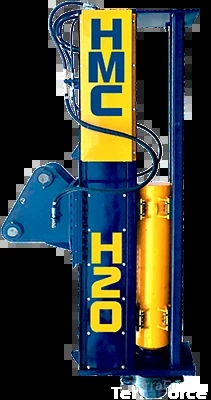
Drop hammer pile driving represents one of the most fundamental and widely-used methods in deep foundation installation and geotechnical engineering. Also known as free-fall or gravity-driven pile driving, this technique utilizes the impact force generated by raising a heavy hammer above the pile cap and allowing it to fall freely under gravity. The resulting kinetic energy drives the pile progressively deeper into the ground, compressing and displacing soil particles to create a secure bearing foundation. This proven methodology has been the cornerstone of foundation work for over a century, offering reliability and simplicity that continues to make it the preferred choice for numerous construction projects worldwide.
The operational mechanics of drop hammer pile driving are straightforward yet highly effective across diverse soil conditions and ground types. The hammer, typically ranging from 500 kg to 15 tonnes, is lifted to predetermined heights—usually between 1 and 5 meters—before being released to strike the pile driving helmet seated on top of the pile. This method is equally effective in granular soils such as sand and gravel, as well as cohesive soils including clay and silt, making it adaptable to virtually any ground conditions encountered in foundation engineering projects. The process generates significant impact energy that not only drives the pile to the required penetration depth but also densifies surrounding soil, improving the overall load-bearing capacity of the foundation. Equipment configurations vary based on project requirements, ranging from simple portable systems for smaller projects to comprehensive pile driving rigs mounted on heavy machinery for large-scale applications involving piles of considerable length and diameter.
Drop hammer pile driving finds extensive application across the full spectrum of deep foundation and construction projects. Infrastructure development projects including bridge foundations, highway construction, and railway embankments regularly depend on this method for establishing structural support. In building construction, drop hammers drive both steel and reinforced concrete piles to secure bearing strata well below surface levels, particularly in challenging geotechnical conditions where alternative foundation methods prove impractical. Waterfront structures, marine facilities, and coastal engineering projects benefit from the method's effectiveness in driving piles through varied subsurface layers. The technology remains invaluable in ground improvement projects and soil densification work, where controlled pile installation enhances foundation performance and structural integrity. Modern practitioners combine this time-tested technique with contemporary monitoring systems and geotechnical analysis, ensuring precise depth control, pile integrity verification, and comprehensive documentation of driving records throughout the installation process.
Drop hammer pile driving represents one of the most fundamental and widely-used methods in deep foundation installation and geotechnical engineering. Also known as free-fall or gravity-driven pile driving, this technique utilizes the impact force generated by raising a heavy hammer above the pile cap and allowing it to fall freely under gravity. The resulting kinetic energy drives the pile progressively deeper into the ground, compressing and displacing soil particles to create a secure bearing foundation. This proven methodology has been the cornerstone of foundation work for over a century, offering reliability and simplicity that continues to make it the preferred choice for numerous construction projects worldwide.
The operational mechanics of drop hammer pile driving are straightforward yet highly effective across diverse soil conditions and ground types. The hammer, typically ranging from 500 kg to 15 tonnes, is lifted to predetermined heights—usually between 1 and 5 meters—before being released to strike the pile driving helmet seated on top of the pile. This method is equally effective in granular soils such as sand and gravel, as well as cohesive soils including clay and silt, making it adaptable to virtually any ground conditions encountered in foundation engineering projects. The process generates significant impact energy that not only drives the pile to the required penetration depth but also densifies surrounding soil, improving the overall load-bearing capacity of the foundation. Equipment configurations vary based on project requirements, ranging from simple portable systems for smaller projects to comprehensive pile driving rigs mounted on heavy machinery for large-scale applications involving piles of considerable length and diameter.
Drop hammer pile driving finds extensive application across the full spectrum of deep foundation and construction projects. Infrastructure development projects including bridge foundations, highway construction, and railway embankments regularly depend on this method for establishing structural support. In building construction, drop hammers drive both steel and reinforced concrete piles to secure bearing strata well below surface levels, particularly in challenging geotechnical conditions where alternative foundation methods prove impractical. Waterfront structures, marine facilities, and coastal engineering projects benefit from the method's effectiveness in driving piles through varied subsurface layers. The technology remains invaluable in ground improvement projects and soil densification work, where controlled pile installation enhances foundation performance and structural integrity. Modern practitioners combine this time-tested technique with contemporary monitoring systems and geotechnical analysis, ensuring precise depth control, pile integrity verification, and comprehensive documentation of driving records throughout the installation process.
Leading డ్రాప్ హామర్లు manufacturers include ACE, AJCE, ALL-KOR, APE, Antaeus, Apollo Techno, Avolon System, BSP International. TerraForce features 500 models from 40 manufacturers.
How many డ్రాప్ హామర్లు models are available on TerraForce?▾
TerraForce catalog features 500 డ్రాప్ హామర్లు models from 40 manufacturers with detailed specifications.
How to compare డ్రాప్ హామర్లు models?▾
On TerraForce you can compare డ్రాప్ హామర్లు models by specifications — weight, power, drilling depth, and other parameters. Use the comparison feature on the catalog page.